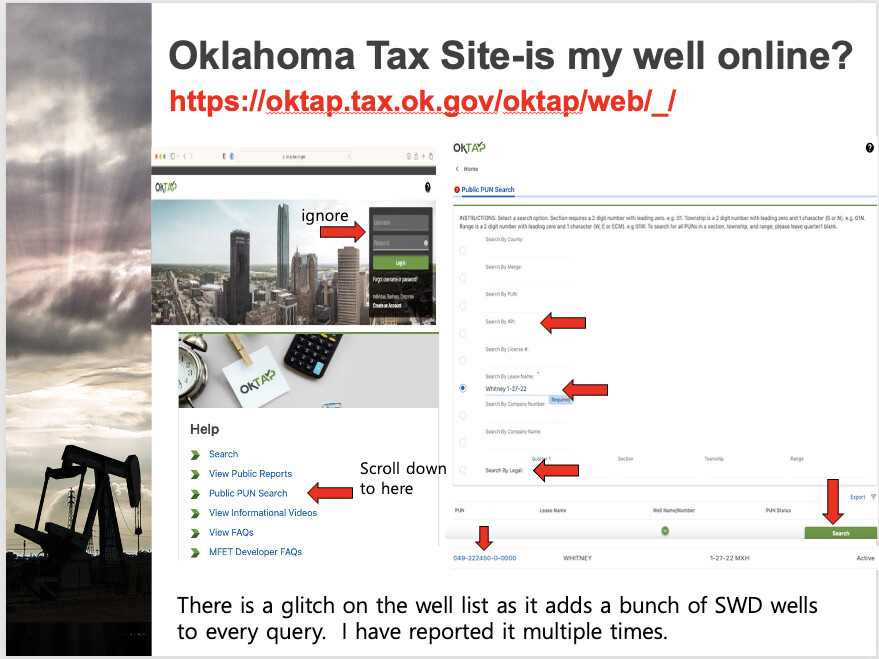
Does anyone know how the infill well system is doing around Section 1-11N-8W? M_Barnes helped me identify them previously, thanks again! This is what she stated the names are: Camino has four permits in those sections. HMB 1108-1-212-132WXH, 3MXH, 4MXH, 5MXH. #4 & 5.
We own a 1% ORRI on a good portion of one of these sections with the common source supply. (First) payment is supposed to be scheduled for late this month. Camino won’t divulge anything.
Thank you so much. I was able to find production reports up until July from April that is helpful! My next question is I own just over a 1% ORRI on 345NMA in Section 1. Those wells are a multi-unit common source supply infill well system and each are allocated 33% to Section 1. Is there an easy formula to determine if your, for example, total production was $100 in sales for a month how much could I (roughly) expect to see that month?
I was given this but it doesn’t make sense: Your royalty will be based upon your % interest in Section 1 x 33% x your royalty % interest.
ORRI (Over-Riding Royalty Interests) are taken out of the working interest portion of the well. They are usually not subject to post production costs in OK. They are often given to a geologist or a landman for putting the deal together. So for every dollar that the operator makes in sales, you get a portion. The ORRI is tied to an original agreement. The wells above extend across three sections, with about 33% of the total length in your section 1, so you would get 1% of ~33% of the sales for each of the wells. The decimal value on the statement may be slightly different for each well since they have different lengths. There may be a royalty term in there from the original lease. Once you get the statement, you can back calculate the royalty. Or call the division order analyst and have them give you the exact equation that they used. Ask for a copy of the original ORRI document if you do not have it. You need it for your files.
The first checks that you receive will be the largest since they are for multiple wells for multiple months of first production. The next checks will be for monthly amounts and much smaller Be aware that the amount may bump you into a higher tax category that first year. Our family puts aside enough to pay the first year’s taxes and the second year at the same amount from that first couple of checks. We put it where it will earn interest and we won’t spend it. The IRS frequently requires quarterly payments for that second year based upon the previous year’s tax amount-even though the well(s) decline in volume and royalties that second year. Then we follow our ancestor’s advice-”spend some, share some, save some”. The royalties will naturally decline as the wells volumes decline, but they can last for many years. We invest in other instruments that will make dividends and earn over time.
Could you help me with the question above? It would be very unusual for a mineral owner’s share to come out an even .01 on a Division Order. It is my thought the original lease would need to disclose the terms of the lease, 1/8, 3/16, 1/5, etc. Our latest lease offer is higher yet with a much lower lease payment. Help me (us) understand how the terms of the lease, and the decimal share on the Division Order is in play. Again, never heard of a straight .01 on a Division Order. We record in each well or lateral each month on a mineral log. Those records go back to the 1950s on perhaps 50 different wells over the years. I have never kept track of the decimal equivalent of the owner’s share of production, as there is no way (that I know of) of checking the accuracy of this number. Can it be done? Thank you for your wonderful answers that make complicated issues seem understandable. It is appreciated more than you can imagine.
The DO can have a 0.01 but it is unusual. Might be an ORRI amount. Those were given to a geologist or landman who helped cut the deal. Sometimes, they end up being 0.01.
The equation for a division order decimal in OK is net acres/actual spacing acres x royalty x percentage of perforations. Example: 10 net mineral acres, spacing 640 acres at 1/5th and a horizontal well with 50% perforations in your section. 10/640 x .20 x .50=0.0015625.
Lease offers usually come with several options each with a different bonus. The higher royalty will have a lower bonus. Most of us would prefer the higher royalty. Over time, the higher royalty from a successful well or wells for MANY YEARS far outweighs the ONE time bonus from a lower royalty.
It is extremely important to keep a record of your decimal amounts for each well. As wells get sold to new operators, you need to make sure that your records stay correct.
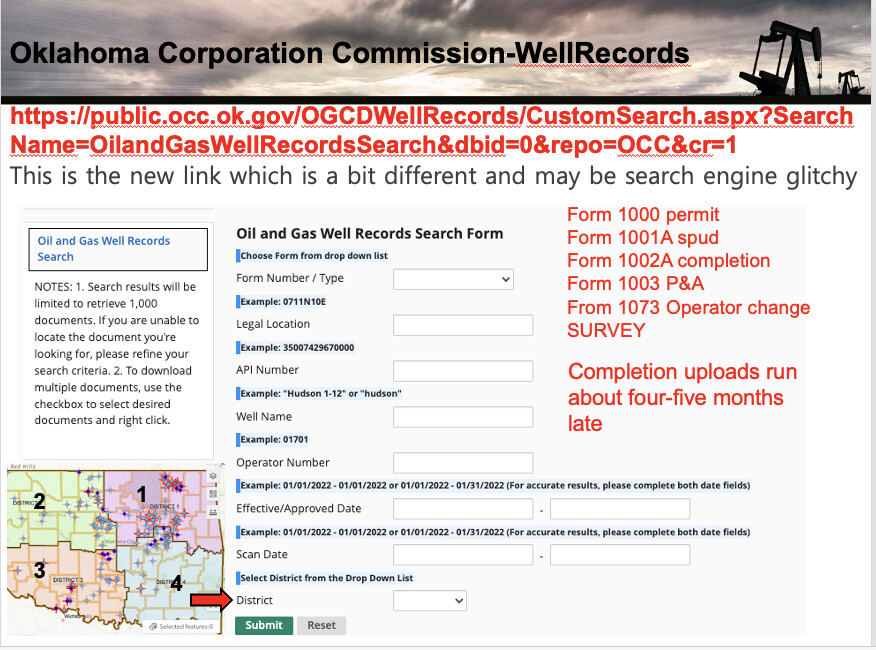
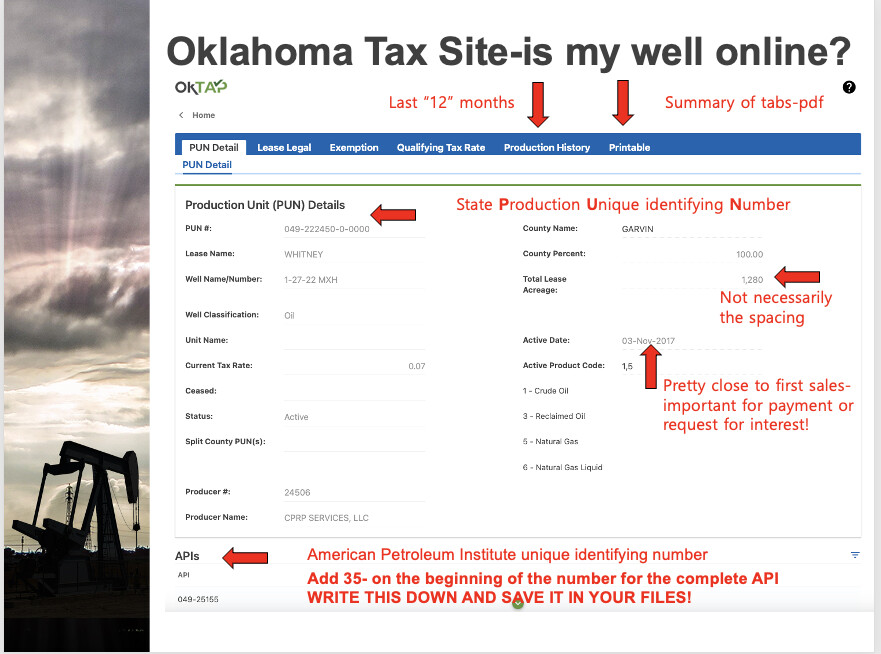
Yes you can find out the components. The decimal is listed on the check statement, so easy to find. You need have good records which have your net mineral acres, the spacing and the perforation percents. If the well is conventional, then usually the perforation number is 1.00. If you have horizontals, then the percentage is usually listed on the Division Order. You can ask the Division Order analyst for your net acres, royalty and spacing but that can take weeks to get the answers back. You can find the spacing on the OK well records site fairly quickly. Often on the completion report. The original lease states the royalty. Be careful as the lease states the gross acreage, not the net acreage. If you have all of the other parts of the equation, you can back out the net acreage.
I keep a list of all of my wells by state, county, township, range and section (or block, abstract name and number and section for TX). I have columns for all pertinent information. I can send you a template to get you started.